
Skin ulcers
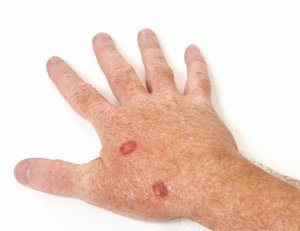
Sores, ulcers, burns, spots, redness: there are so many lesions that can alter the normal appearance of the skin. It is, after all, not only the largest and heaviest organ in the body, but also the most exposed one, which performs various functions: protective – sensory, thermoregulatory, secretory, permeability and aesthetic. The skin is also greatly affected by the lifestyle of
skin lesions are a heterogeneous and complex group of disorders with a wide variety of causes. The broad panorama of such lesions can be divided into two macro-areas:
1) acute, i.e. injuries that complete their natural healing/healing cycle within 8 weeks;
2) chronic, i.e. injuries with a longer course, which have lost the ability to rebuild their anatomical and functional integrity.
In more detail, the following categories of skin lesions are identified:
Acute
Burns
Post-traumatic and post-surgical injuries
Chronic
Vascular injuries (arterial, venous, mixed and lymphatic)
Diabetic foot
Pressure ulcers
The causes of injuries are often multifactorial, as are the many factors that can prevent healing of an injury that originates as acute and often risks evolving into chronic.
It follows that dressings that can shorten wound healing time can be not only a benefit to the patient, but also a valuable tool to contain social expenditure.
Advanced Wound Care (AWC) refers to the use of advanced dressings that can ensure moist wound healing of acute and chronic skin wounds.
The Wound Care Society created the acronym TIME to recall the main pathogenetic factors of chronic wounds and to direct the therapeutic choices to be applied according to the expected clinical outcomes.
In particular:
T = Tissue. In this phase the therapeutic choice must aim at eliminating the devitalized or necrotic tissue that constitutes an obstacle to the healing process.
I = Infection/ Inflammation. In this situation, the therapeutic choice must aim to resolve the infection/inflammation state of the wound.
M = MOISTURE. Control of the moisture balance of the wound, which may range from dry to macerated. The degree of moisture is a factor in the healing process.
E = Epithelialization. Evaluates the ongoing re-epithelialization process and identifies any impediments to reactivation of the process (e.g. undermined edges etc).
This algorithm allows for the most appropriate selection of different types of dressings according to the specific use and the desired clinical outcome.
It has been shown that the appropriate use of advanced and biologically active dressings, although more expensive than traditional ones, results in shorter healing times, qualitatively better healing, improved quality of life for the patient, reduced hospitalizations and reduced consumption of dressing material.
Patients of all ages can be treated:
medication serves to disinfect and protect, minimising pain, burning or itching,
dressings serve to: disinfect, cleanse, remove fibrin, stimulate granulation tissue and then re-epithelialisation
fight local infections: a culture swab with an antibiogram is essential to rule out a local infection and start targeted antibiotic therapy
surgical treatments are performed with an infection-free and cleansed ulcer surface and reconstructive plastic surgery techniques using skin grafts or flaps
Dr Savoia will try to coordinate an often difficult path to healing a difficult wound.