Abdominoplasty-Tummy tuck

Abdominoplasty – Tummy Tuck
Are you fed up with your tummy? Do you want to dry out your abdomen and make it toned and flat?
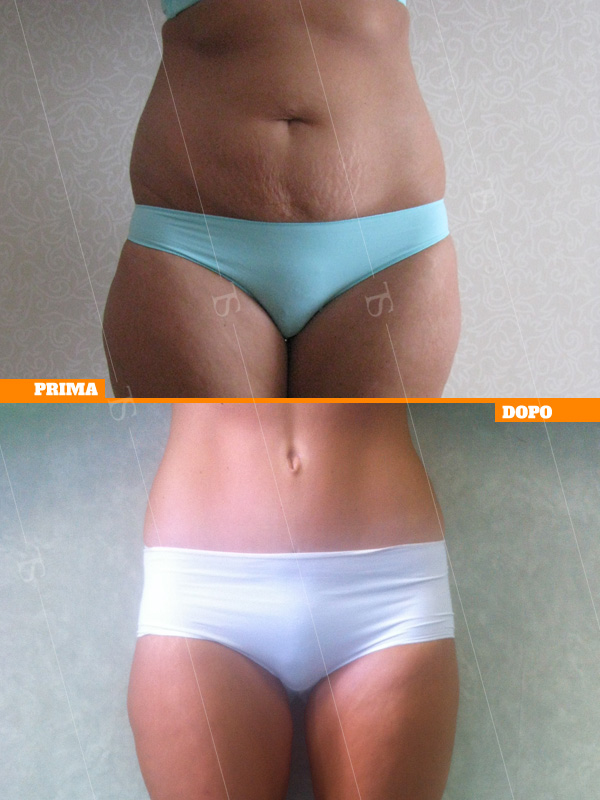
The ultimate remedy for men and women with an adipose belly is liposculpture, which removes localized fat from the hips, upper abdomen and lower abdomen in a single operation.
If, on the other hand, the belly is enlarged but the skin is also loose and saggy, abdominoplasty is the only indicated operation.
If drastic weight loss, pregnancy, genetic predisposition and aging have caused a loss of elasticity of the tissues and abdominal muscles, and if even through sports practice or a balanced diet one has not succeeded in improving this imperfection, the surgical procedure will solve or minimize the problem of the belly skin folding in on itself.
Aesthetic defects and solutions
The operation is desirable for certain types of aesthetic defects, which we differentiate by gender:
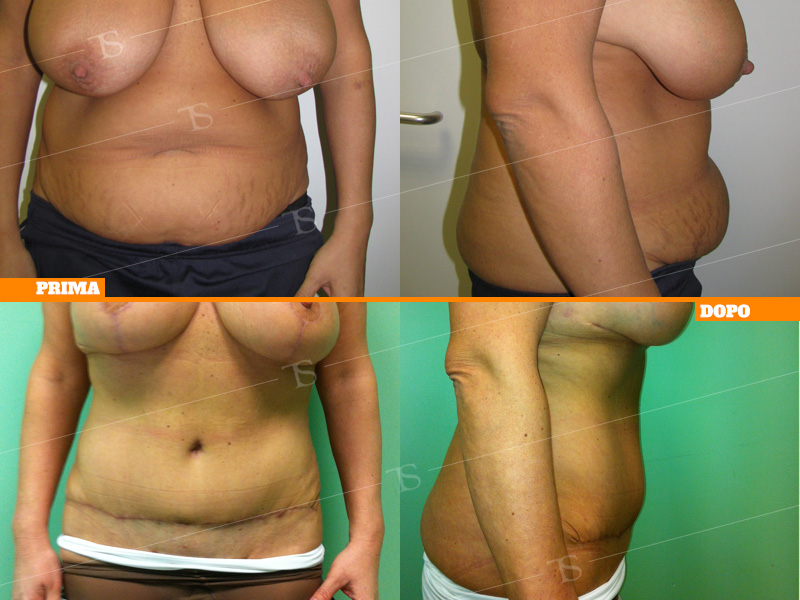
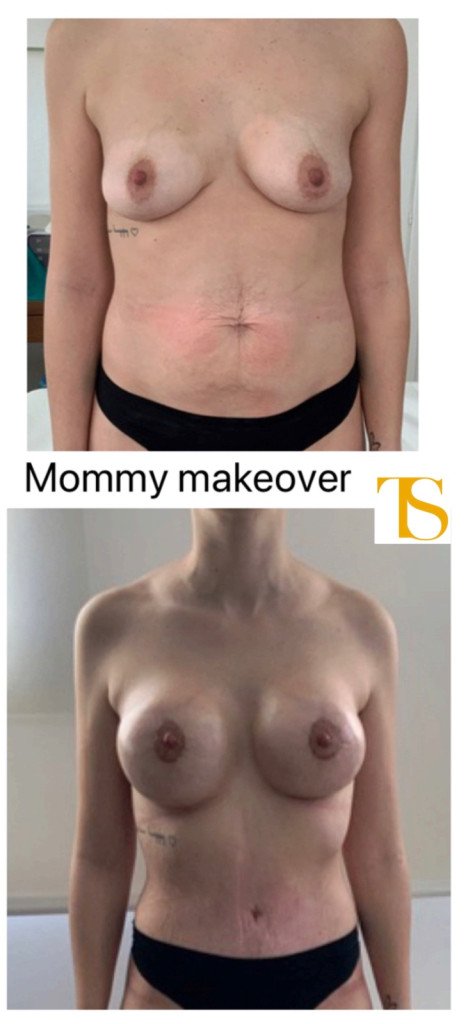
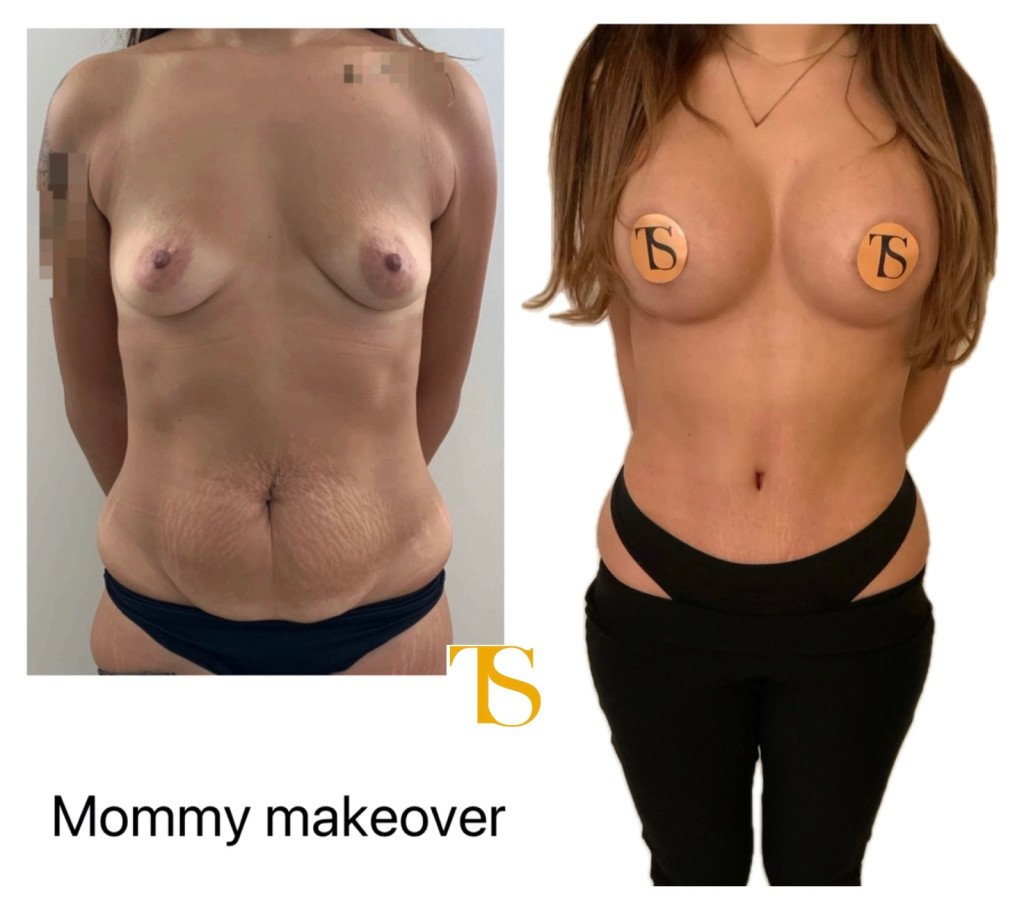
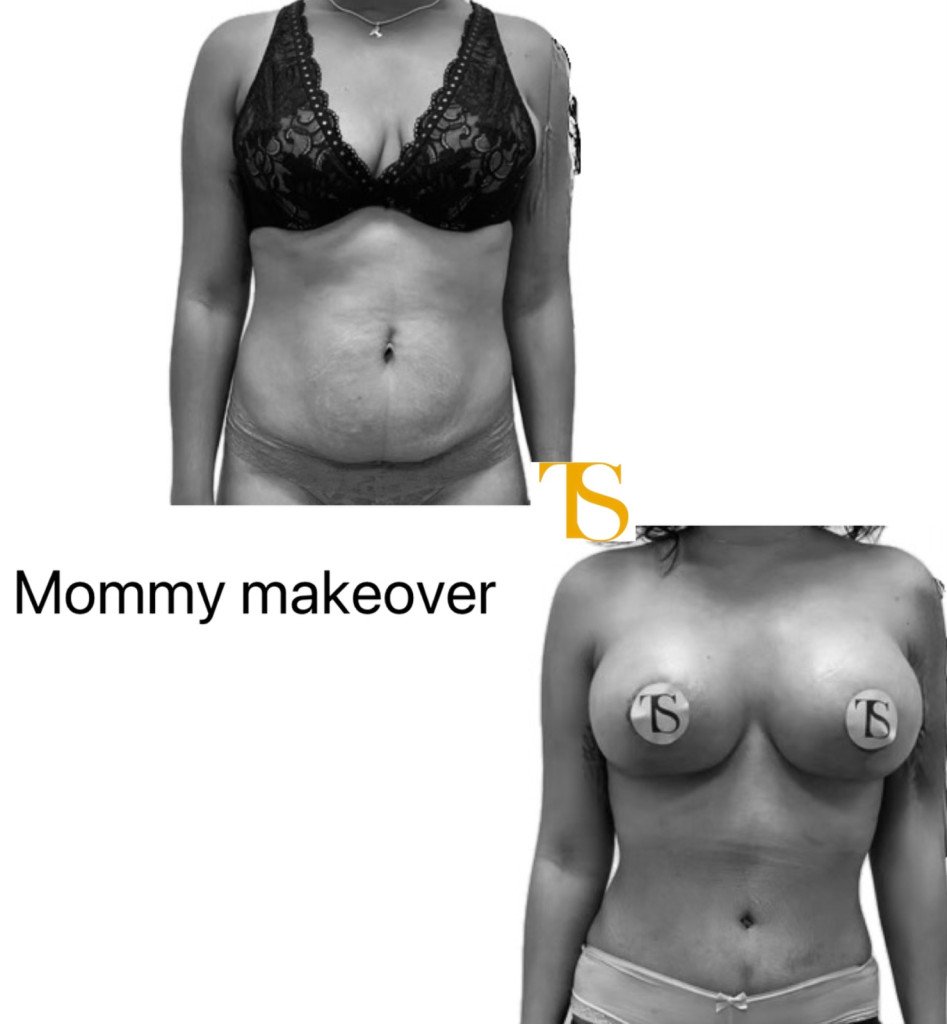
women who, following pregnancy or considerable weight loss, have excess skin, stretch marks, sagging and even folding of the muscles in the abdominal region. With this operation, pregnancy outcomes such as severe diastase of the rectus muscles up to bowel herni can be resolved with a very low scar and without any intervention on the belly button, which is simply detached from the inside and reinserted later. The general surgeon can also implant a definitive mesh if necessary,
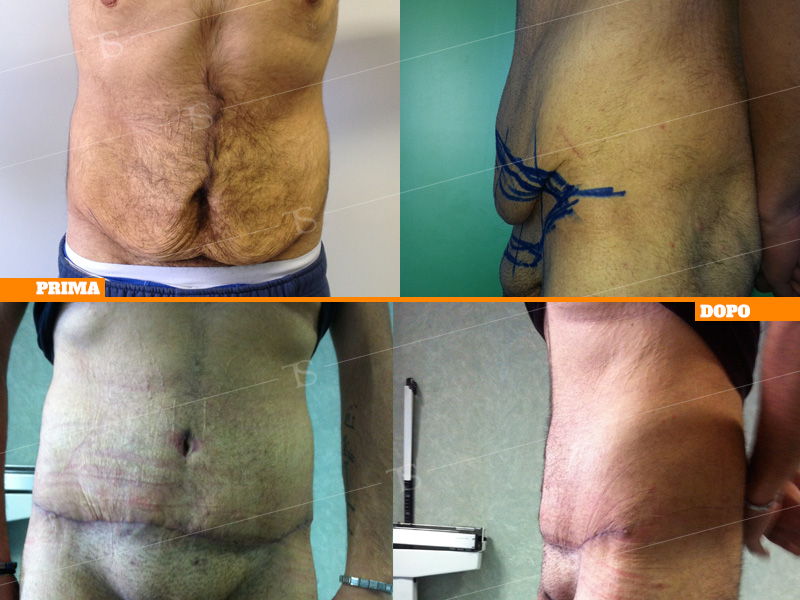
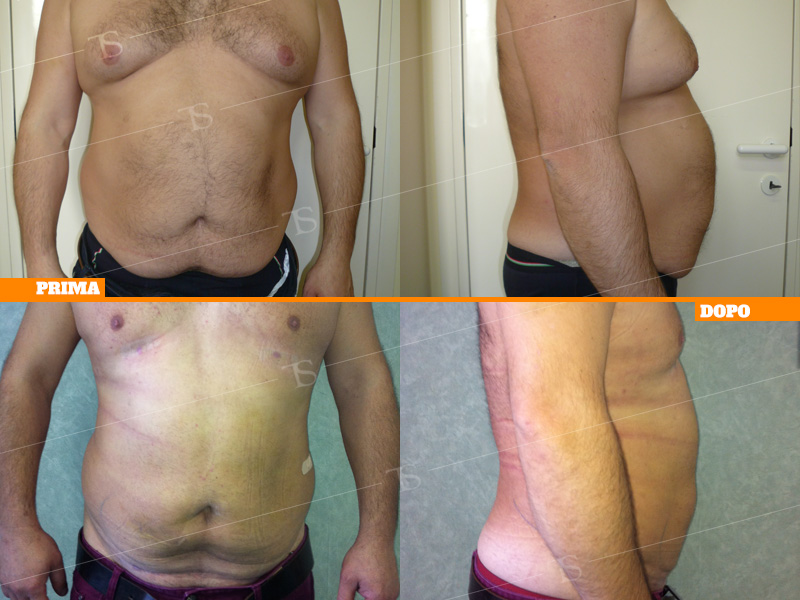
men with abdominal adiposity and poor skin and muscle elasticity of genetic derivation; or men who, due to excessive weight loss, have lost muscle tone and increased flaccid abdominal mass.
Objectives of abdominoplasty
To remove or correct pre-existing scars and stretch marks (located on the portion of skin that is removed with the operation)
-skin and muscle sagging
-fat deposits
-sagging skin
-correction of a deformed navel
What are the surgical options?
Microliposculpture with 2-3 mm fine cannulas (60-minute operation as a outpatient regime under local anesthesia with slight sedation),
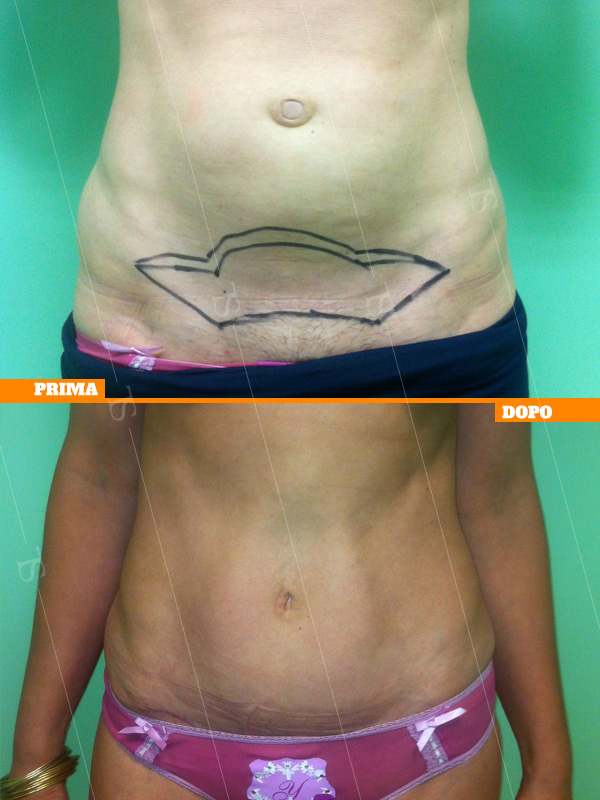
Mini-abdominoplasty: skin is only removed below the umbilicus above the pubis (typical in pregnancy outcomes with mild laxity) and without moving the umbilicus (90-minute operation and one night in the clinic and local anesthesia with sedation),
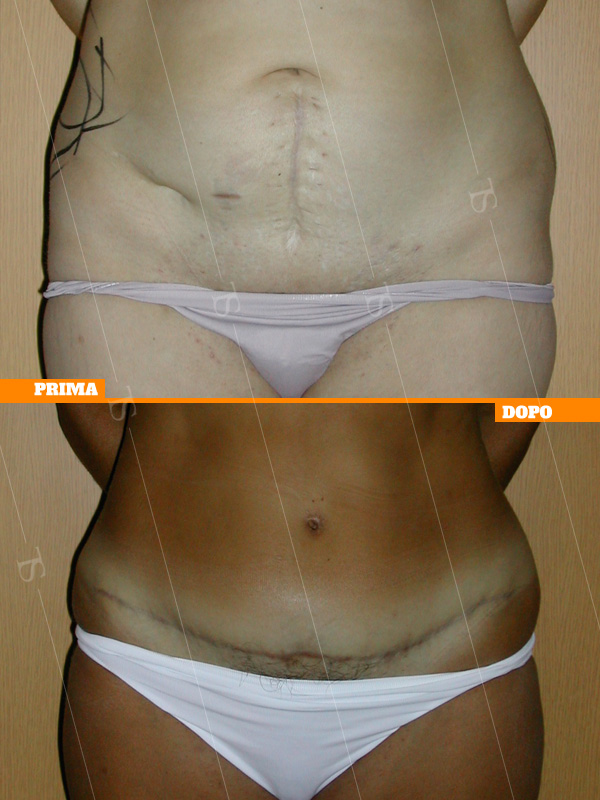
Complete lipo-abdominoplasty with umbilical transposition: this is the one that allows the largest amount of excess skin to be removed with a very low incision and also allows access and correction of muscle defects (3-hour operation, up to two nights in the clinic and general anaesthesia)
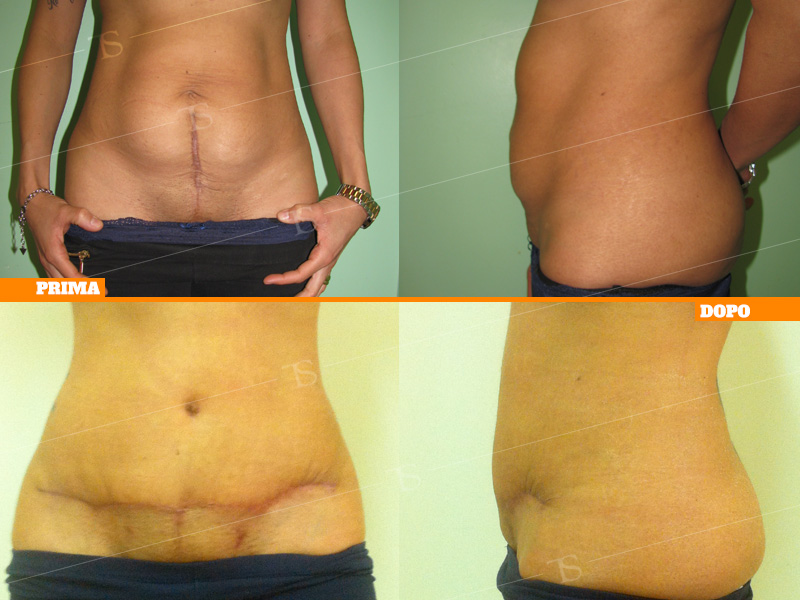
Low abdominoplasty for diastasis gravidarum or laparocele without or with little skin removal: allows with a very low incision (Brazilian) to detach the umbilicus from the wall, correct the musculature and re-implant the umbilicus in the same place or just below.
Non-surgical abdominoplasty
Absorbable threads (allow small areas of loose skin to be tightened, especially above the belly button in thin people. This is a technique similar to the V-lift invented in Korea that is used in the face transposed to the abdomen.
Solutions that dissolve fat in particular act on limited localized adiposity. They are called Intra lipototherapy or Lipodissolution which, through injections of a substance based on Deoxycholic Acid, allows fat accumulations to be dissolved. It is necessary to accompany, three days after the treatment, a cycle of draining and modeling massages to empty the accumulations.
Pre-operative assessment
Objective: analysis of the abdominal region, aimed at investigating the causes of the defects and the possible presence of umbilical hernias or laparoceles (diastase of the rectus abdominis muscles or widening at the midline) through clinical assessment of the soft tissues of the abdominal wall. During the meeting, the patient will discuss the problems and expectations of the operation with the surgeon, clarify any doubts, and can check the results of previous operations by comparing photographs of similar cases taken before and after the operation.
It is suggested that abdominal muscle strengthening exercises be performed, paying close attention to abdominal pressure and the health of the spine.
Surgical techniques
Liposuction
It involves the upper abdominal quadrants and flanks, which are excluded from the main operation. It can be associated with both mini-abdominoplasty and complete abdominoplasty, but it can also be chosen as a single technique to shape the abdomen and flanks, using suction with small cannulas, after tumescent infiltration of a vasoconstrictor solution.
It is nowadays also associated with the definition of the adipose tissue overlying the muscular abdominals as if they were the 6 pack abs.
Performed in patients who have localized adiposity, usually up to 50 years of age, without stretch marks, and who wish to have the fat removed but still have skin that can retract without undulations and irregularities.
Mini abdominoplasty
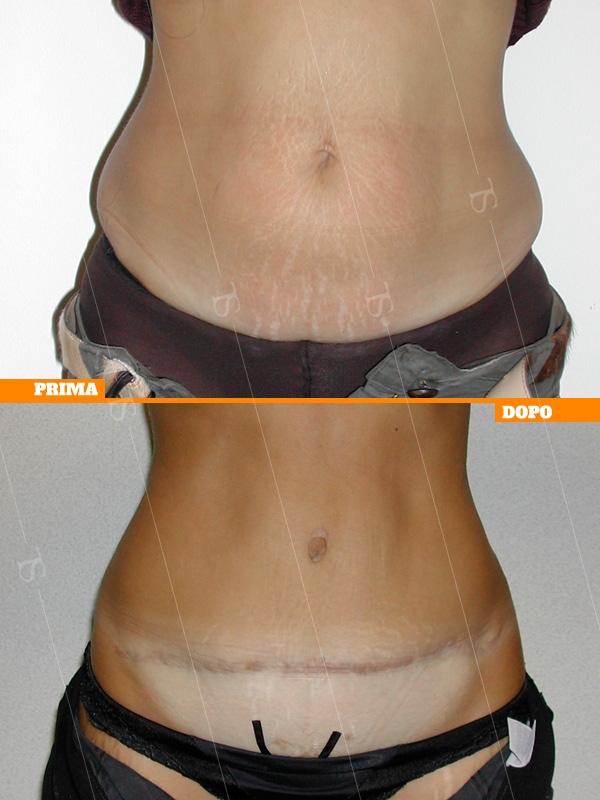
Involves only the quadrants of the abdomen below the navel; the umbilical scar remains in place. The preoperative design is carried out according to the fleur-de-lys (“lily flower”) technique, which allows the skin of the pubis to be stretched as best as possible while maintaining a very low scar slightly longer than that of a caesarean section.
It is indicated in thin patients with little excess skin (who do not have a real “apron”), who want to obtain a flat abdomen and remove fat located on the hips or in the upper umbilical region. If the belly button is more than 15 cm away from the pubis, a very low scar slightly longer than the caesarean section can be obtained (brazilian like abdominoplasty).
Complete abdominoplasty
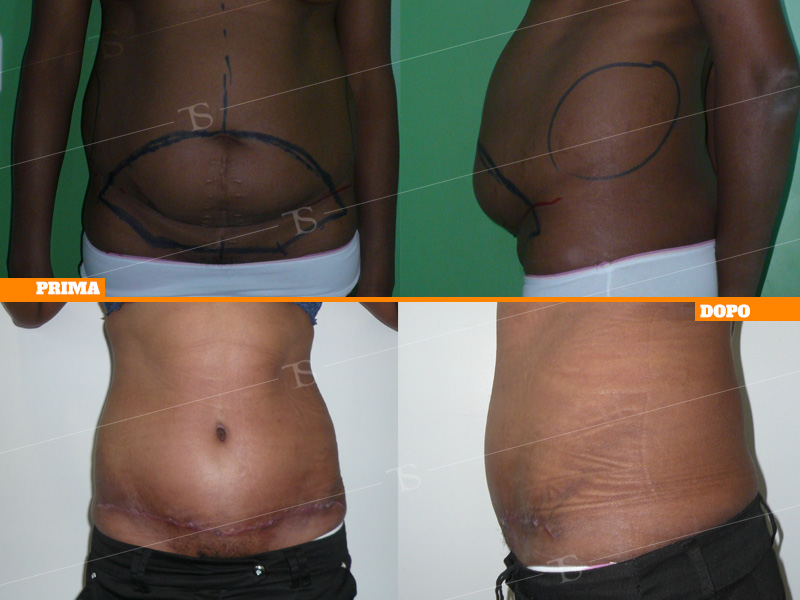
Involves an incision between the two iliac spines that join in the middle, above the pubis, and the subsequent dissection from the lower quadrants to the costal arch. The stump of the umbilical scar is incised circularly and left nourished from the depth. Excess tissue is then dropped and repositioned at the end of the removal.
Dr Tommaso Savoia separates the skin and fat from the underlying abdominal muscles by making an incision running from one side of the abdomen to the other. The skin and fat are then ‘pulled’ downwards, as if they were a ‘tendon’, the excess is removed, and the abdominal muscles are reinforced with appropriate sutures if necessary (in the case of a Laparocele); finally, the surgical wounds are sutured and the umbilical scar is restored to its natural position. Suction drains are placed.
Complete abdominoplasty with umbilical transposition is dedicated to patients with a real “apron abdomen” or with a lax skin full of stretch marks, a typical result of great weight loss (even 30-40 kg) due to previous obesity.
Lipoabdominoplasty is an evolution of abdominoplasty that, while maintaining the same position and length of the incisions, allows better shaping of the tissues by emptying them of fat through preliminary liposuction and advancing the flap with greater preservation of the lymphatic and venous tissues to allow faster healing.
Abdominoplasty with plastic mole in patients with post-pregnancy diastase
In thin patients with abdominal musculature that has given way since pregnancy and who have little loose skin, this technique allows with a very low incision to correct the muscle wall and at the same time reshape the belly button from the inside without external scarring.
The muscular wall is repaired with suture techniques or even with mesh, while the scar remains very low at the height of the caesarean section and a little longer
Preparatory examinations
At the end of the consultation, after listing all the information relating to the operation, the doctor prescribes the necessary clinical tests to collect essential data relating to the patient’s state of health:
Static and dynamic ultrasound of the abdomen (i.e. at rest and with contracted muscles).
Blood tests: blood count with leucocyte formula, glycaemia, creatinine, azotemia, plasma electrolytes (chlorine, calcium, potassium, sodium) total protein, liver function (ast, alt), coagulation (pT, PTT),
electrocardiogram.
It will also be of paramount importance to
discontinue anti-inflammatory or other blood-thinning medications at least 7 days before surgery,
report any allergies,
reduce or eliminate cigarettes so as not to run the risk of skin necrosis or poor healing,
discontinue the contraceptive pill at least one month before surgery.
Healing time and possible complications
At home, antibiotics and heparin drugs will be prescribed by subcutaneous injection for thrombosis prophylaxis.
In the immediate post-operative period, the patient is fitted with a Velcro bandage high from under the breast up to and including the pubis (to be worn for at least 40 days) and aimed at containing the swelling of the area and resting the sutured muscles, and two drains to suck out the serum (to be removed within 2-3 days depending on the type of abdomen).
The range of complications of abdominoplasty surgery includes scarring disorders, decreased skin sensitivity, the formation of hematomas or seromas (in the area where the doctor has operated) and episodes of skin necrosis. Apart from general considerations, everything depends on the patient’s skin type and its intrinsic capacity to regenerate.
What scars remain after abdominoplasty?
The scarring outcomes of the operation depend on the type of operation required and the type and regenerative capacity of the patient’s skin tissue. Indicatively, scars will be positioned as follows
a linear scar running down the lower abdomen, which is generally entirely concealed by the swimming costume
a circular scar around the navel (if the surgical technique has provided for it), concealed inside the navel itself.
Post-operative recommendations
make as little effort as possible, getting help from someone both at home and outside the home, at least for a few days,
absolutely avoid smoking
avoid exposing the scars to the sun during the first few months after the operation, protecting them with total sunscreen cream (the sun’s rays can generate the formation of skin spots).
USEFUL INFORMATION
Lasting
Complexity
Anesthesia
dressings
healing time
Before and after