otoplasty
 Otoplasty – cosmetic ear surgery
 Otoplasty – cosmetic ear surgery
The aesthetic harmony of a face also depends on the size and shape of the ears. Otoplasty is the surgical procedure aimed to correct congenital defects and cartilage anomalies of the Pinna. Whether prominent, protruding, bent or falling, this surgical procedure solves cases of irregularities present at birth or those of post traumatic reasons. It will benefit not only organ function but also the self-esteem and sense of security in interpersonal relationships of the patient itself.
Aesthetic defects and solutions
Plastic surgery reduces the size of the ears, modifies their conformation and temper the asymmetries. Although not an element of beauty in its own right, the position, shape and size of the ears affect the general aesthetic perception of the face, helping to make it more or less pleasant on the basis of the proportionality criterion compared to other elements present on the face (eyes, nose, mouth). In fact, it may occur that ears with obvious defects may eclipse the rest of the face or make it less attractive.
Ear imperfections which can be found more frequently, and which can be surgically resolved, are:
-prominent ears
-defects of earlobe
-correction after piercing or dilator
-reduction of the auricle
-ear remodelling
-approach of the auricle to the head
Specialist visit
For adults and children: otoplasty is a standard cosmetic surgery procedure. Contrary to most plastic surgeries, otoplasty can be performed at a very young age: at 5/6 years of age, in fact, the auricle has completed its development that is why and there is no contraindication for the intervention on the baby’s prominent ears. During the specialist’s visit, before performing the otoplasty, the surgeon will check the patient’s motivation for undergoing surgery to evaluate the best aesthetic solution, any possible complications and the best surgical technique to achieve the goal.
Preparation for surgery
Before the surgery it will be necessary for the patient to carry out some standard examinations: blood counting formula leukocyte, blood glucose, creatinine, blood urea, plasmatic electrolytes (chlorine, calcium, potassium, sodium), total proteins, liver function (ast, alt), coagulation (pat, PTT) and electrocardiogram.
To undergo cosmetic surgery, you must be in good physical condition and not pregnant. It is also desirable, if possible, to cut the hair or to gather them so have the cleanest surgical field achievable. The full blood test will be necessary to analyze the level of clotting. The clinical and photographic examination, will allow the surgeon to have a clear situation on any malformations of the patient’s jaw and already have a projection on the state of deformation of the ear. Before and after surgery, the doctor will recommend not taking medications containing acetylsalicylic acid (such as Aspirin).
Surgery
The otoplasty does not concern the functioning of the auditory system, but exclusively the aesthetic remodelling of the ear.
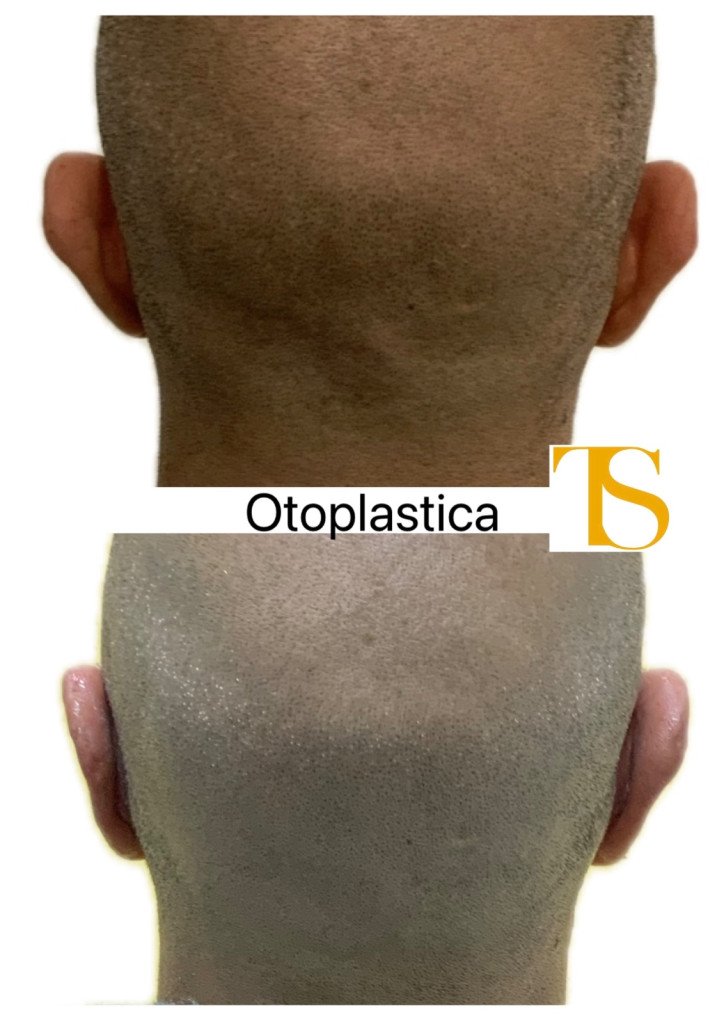
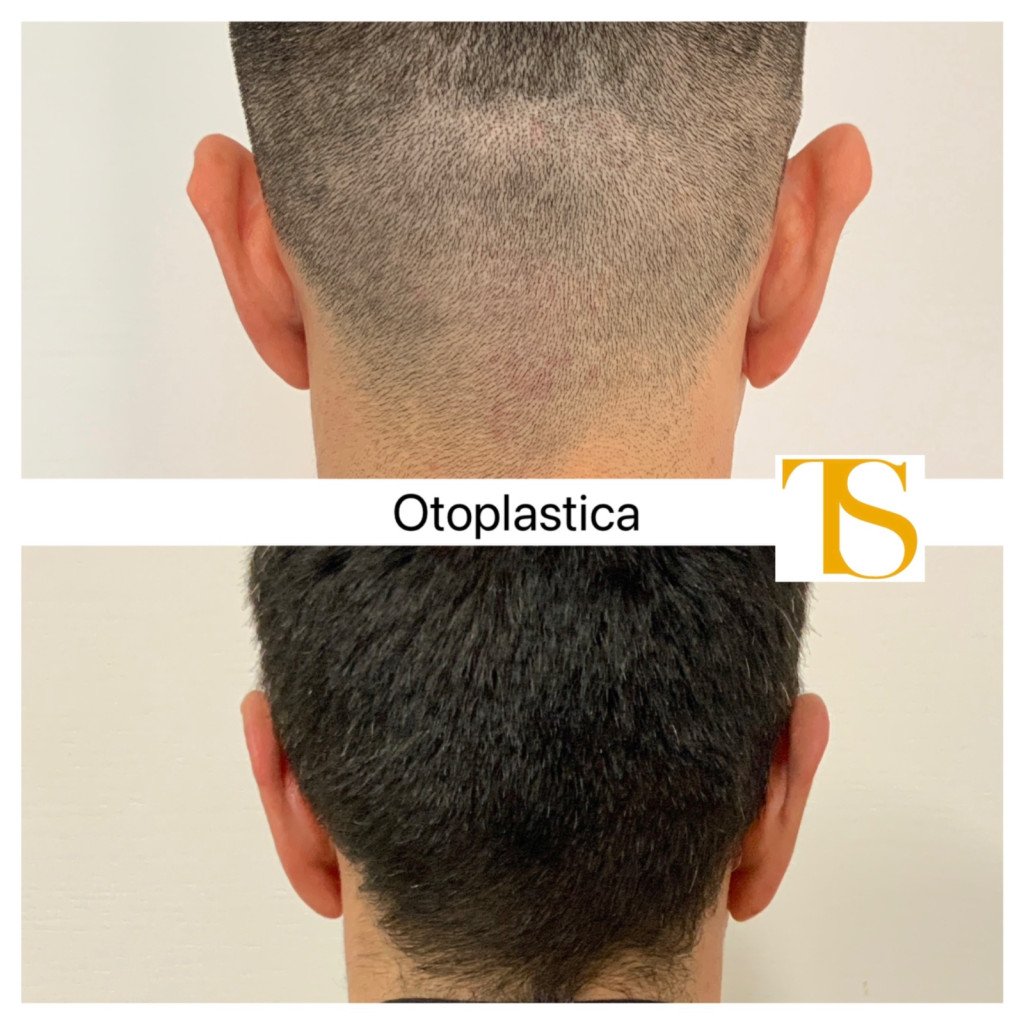
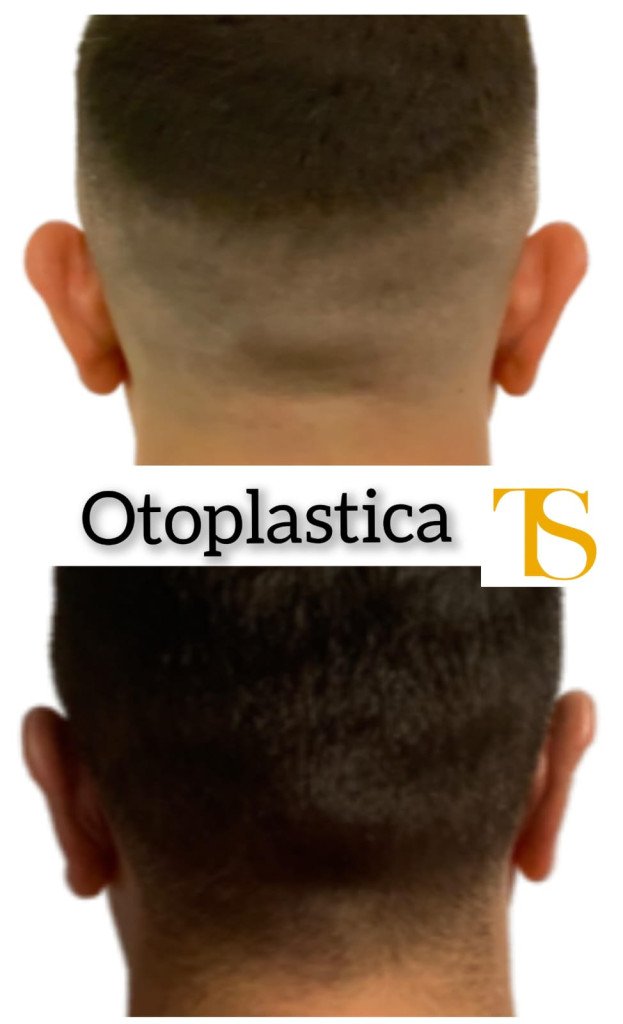
Dr. Tommaso Savoia proceeds surgically, making a small incision in the back area of the ear and taking a strip of rhombus-shaped cartilage of the Concha. The procedure begins with correcting the natural curvature of anthelix (i.e. the convex fold between the concave portion and the outside edge of the ear) and ends with fixing the Concha to the mastoid bone (it is the hollow part just outside the auricular channel). Through this procedure the ear will be more adherent to the head and, as a result, less noticeable in a frontal view. The cut made in the back area and the application of internal stitches guarantee that the scars will remain slitghly invisible. Surgery also makes possible to correct asimmetric position one ear relative to another and to treat congenital malformations. Otoplasty is a relatively simple procedure that lasts approximately one hour and is performed under local anaesthesia (with sedation that may vary depending on the type as outpatient basis) and ends with the application of bandages.
Healing times
After surgery, for about 10/15 days, the patient will have to use a protective band in day time and for another 2 months while sleeping so to prevent any unwanted direct trauma.Pain may occur overnight after surgery that can be overcome by taking standard analgesics orally and/or combined with antibiotic therapy for a few days. Suture stitches will fall on their own after 8-10 days after surgery. The surgeon will recommend a series of behaviours to be taken to help the healing: it will be important to avoid, for a month, any sports activity that can lead to traumatic contact at the level with the ear. Then the resumption of all normal activities.
Possibile risks can be linked to the eventual infection of the Pinna and residual defects caused by the “memory effect” of the auricle itself, that is the natural tendency of the cartilagineous structure to return to its original position, bending slightly outwards again. It must be said that complications are generally rare. The post-operative bleeding (the day after surgery) is normal. If, on the other hand, it shows up even after the first day, you need to contact the surgeon. As for scars, some may become hypertrophied and, as such, may be treated surgically or with cortisone injections.
Price
Several factors influence the price of a procedure in otoplasty. Firstly, whether it is bilateral intervention or on one ear, but many other aspects affect the final price, which can approximately range between EUR 1 500 and EUR 3 500
USEFUL INFORMATION
Lasting
Complexity
Anesthesia
dressings
healing time
before/after