Reduction mammoplasty

Reduction Mammoplasty- breast hypertrophy-gigantomastia
The over-developed breast may be aesthetically uncomfortable and unpleasant and can affect negatively women a different ages from both physical and psychological point of view. Physical drawbacks caused from big breast are due to the weight that lean against cervical and lumbar spine and the friction of the breast skin on the abdomen to cause skin fold inflammation and dermatological infections.
Reduction mammoplasty is the response of cosmetic surgery for a more serene life in all areas, from the choice of clothing to athletic practice.
It is a surgical procedure that reduces the breast size removing the pendulous gland and skin in order to reduce final weight and relieve symptoms of back pain. This procedure can also reduce the size of the areola and nipple putting them in a higher position. Breast reduction responds to functional and cosmetic needs.
Aesthetic defects and solutions
Breast hypertrophy can be of family origin and occurs at puberty, or it can be from hormone-related decrease and manifests after menopause with a more fatty predominance. In other cases, it is due to proportional increases in body weight or also it can be a result after one or more pregnancies. From the age of 18, surgery can be carried out and can help to restore serenity to a teenager confronted with physical and psychological problems. In all cases, realistic expectations should be evaluated with regard to the new aspect of the breast and remember that the result is not “perfection”, but a terrific improvement of the pre-existing condition, in relation on issues such as:
-Asymmetric breast
-Disproportionate big breast
-Pendulous breasts
-tuberous breast (https://www.tommasosavoia.it/en/reconstructive-skin-surgery/tubular-breast/ )
In addition to the level of relaxation and the position of the nipple in relation to the inframammary fold , breast hypertrophy is also distinguished from the amount of mass removed during surgery.
Three types are identified:
-small (up to 200 cc),
-moderate (between 200 and 500 cc),
-severe (between 500 and 800 cc).
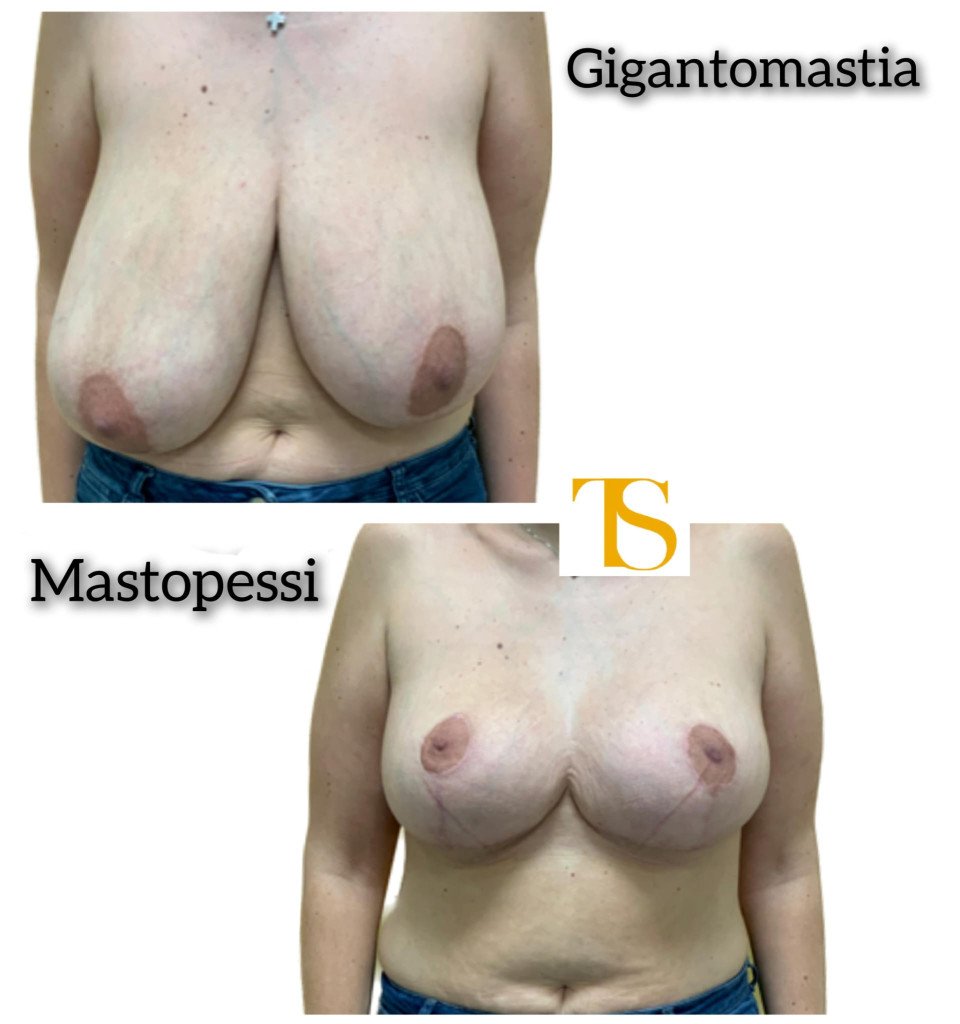
If the mass to be removed exceeds 800cc, the procedure is called Gigantomastia. In this case, the weight of the breast volume burdens on the supporting tissues of vertebral spine and produces moreover inflammation of the skin of the inframammary fold.
Specialist examination
Preliminary clinical features to be assessed at first to decide the most correct operation are:
- Instability of the patients weight undergoing Yo-yo syndrome
- Skin stretch marks on the breast skin as a marker of poor elasticity
- Evidence and quality of previous scar
- Shape and volume of the breast
- Position of the nipple areola complex compared to the inframmmary fold
During specialist consultation all of these features will be analyzed to so plan and preview all the possible results and changes that breast shape will undergo in the 12 months of settlement after surgery. It will be really important to lose weight only before due to the fact that slimming after surgery would render loose the consistency of the skin and therefore the aspect of the breast
Preparing for surgery
During this preliminary phase, the surgeon will perform appropriate measurements, drawing affected areas to determine excess volume (and making it visible to the patient too), and choose the most appropriate surgery procedure. It is a preliminary assessment of health status (clinical history, pathologies, allergies and therapies) to exclude problems that could negatively affect the final result.
At the end of the specialized examination, the surgeon will order a series of clinical examinations to determine the patient’s physical conditions. In addition to electrocardiogram, ultrasound and mammography, it will be necessary to carry out a control of blood tests: blood counting formula leukocyte, blood glucose, creatinine, blood urea, plasmatic electrolytes (chlorine, calcium, potassium, sodium), total proteins, liver function (ast, alt), coagulation (pat, PTT).
These measures are to be carefully respected:
-the contraceptive pill must be suspended at least one month before the day fixed for surgery
-the use of medicinal products containing acetylsalicylic acid and NSAID derivates shall be suspended,
-Cigarette consumption should be reduced at least 4 weeks prior to surgery
-It will be necessary to inform the surgeon of the use of any medication
Surgery
Reduction mammoplasty is generally performed under general anesthesia and lasts a from two to three hours with a possible discharge on the same day or can be advised a recovery overnight.
Surgical techniques can be distinguished:
- Regarding to the scar extent and position we define two techniques an “inverted T “ classic and more reliable for planning and results and a “vertical “ more recent for moderate reduction but with some risk of parenchima bottoming(in both cases there will also be an incision around the areola).
- Regarding the vascular pedicle that nourishes the areola complex. We describe superior pedicle, a supero medial pedicle, inferior pedicle and free transfer of the nipple areola complex technique . Surgeon will decide with technique would be more safe to prevent any vascular complication of to the nipple areola complex.
The surgeon will remove excess glandular tissue, adipose tissue and skin, and then reposition the areola-nipple complex to a new location.
Once the areola-nipple complex has been repositioned, the surgeon will tighten the pillars to give a conization effect to the new shape of the breast . At the end appropriate drainages and dressings will be applied.
Breastfeeding and breast reduction
The Breastfeeding issue deserves a separate depth. In cases of mild breast reduction breast feeding may not be affected. Whereas we face a major reduction breast feeding may be impaired. It happens, in fact, that part of the glandular tissue is removed during the procedure, with a consequent possible interruption of the lactiferous ducts. Also sensibility of the nipple areola complex may be impaired so that the patient should be adequately informed and be aware of this.
The surgeon will ensure that the glandular ducts are preserved as much as possible so that the possibility of breastfeeding is not compromised: however, it is not possible to guarantee that the operation will not have any consequences in this way and the patient should be adequately informed and aware of this.
Risks and possible complication in Reduction mammoplasty
Generic complications are to be considered for any type of surgical procedure.
Possible risks of breast reduction include:
reduced sensitiveness of the nipple and areola
-Vascular distress of the areola
-infection of the wound,
-bleeding or hematoma
-residual volume and shape asymmetry
-adipose tissue suffering
-hypertrophic or pigmented scars.
Healing times:
Absolute rest is prescribed during the 48 hours following the intervention. At the end of the operation, the applied drainage is left for 1-2 days, in combination with a compression bandage with a special bra (“sporty”, without underwire, with front opening) to be worn day and night for eight days.
During the first few days, the treated area may become swollen and the bruise will be visible. The wounds heal in about two weeks. It will be necessary to limit the movements of the arms and efforts for about a month (especially in order not to compromise a good healing), but after 36-72 hours, it will be possible to take back the “light” activities. Indicatively, after about ten days, the patient will be able to return to work, and three weeks after the operation, it will be possible to return to sports practice. The final result can only be appreciated after approximately 2-3 months, although the scars will be completely formed and absorbed only after 6 months. The aesthetic result is in general very good and it will be of importance to not lose weight after so to not lose breast consistency.
Management of scar after breast reduction
The breast reduction surgery involves the formation of scars around the areola and in a vertical line that extends down and along the inframammary fold. During the first few days, they will be reddened. After that, they will tend to take a more neutral and natural colour and therefore less visible. Patient will be advised to treat the scar applying silicon gel or silicon sheet for at least 6 months. In cases of poor scarring with hypertrophy or pigmentation may be prescribed fractional laser co2 or intra lesional corticosteroid injection.
Price
Indicatively, the prices for a breast reduction surgery can range from 6500 to 9,000 euros.
USEFUL INFORMATION
Lasting
Complexity
Anesthesia
dressings
healing time
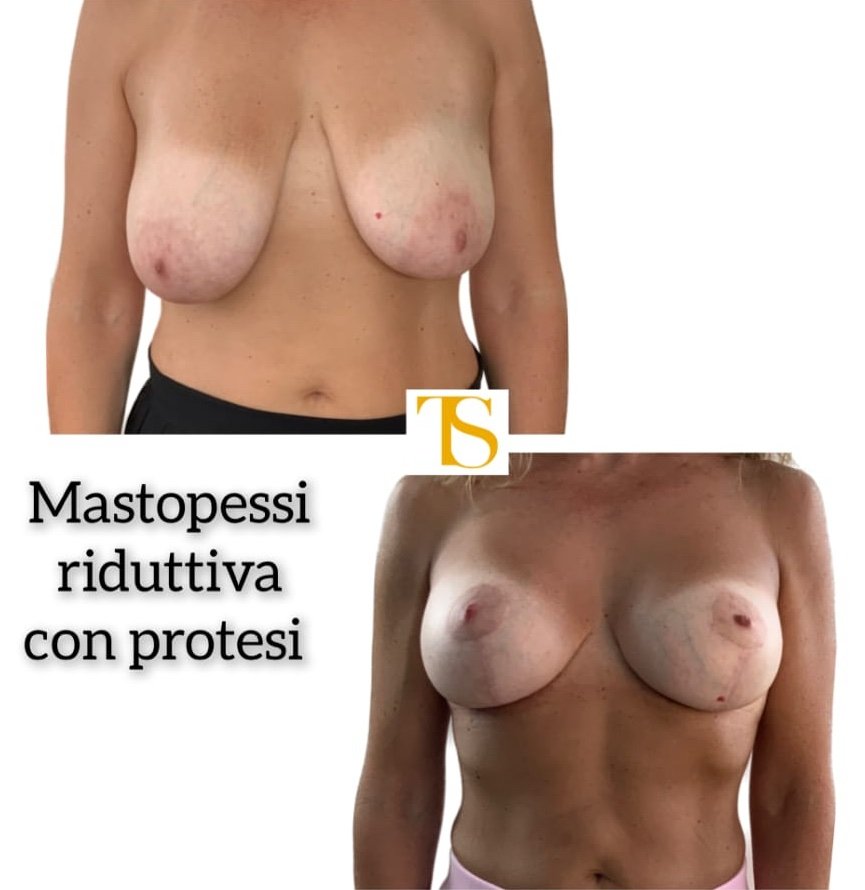
Breast reduction B/A pictures