Leg and thigh liposuction-Vaser Lipo

Vaser HD Liposuction for the Legs – Ultrasonic Liposuction – Cosmetic Surgery for the Legs
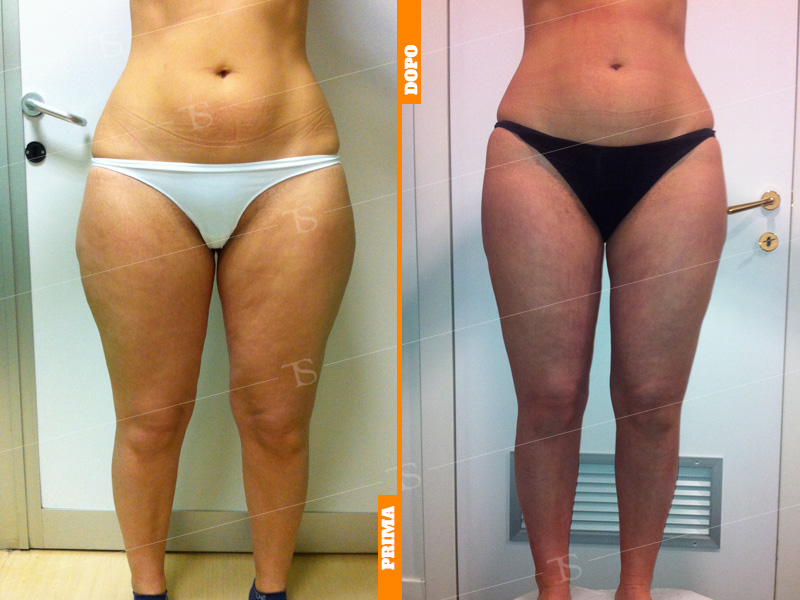
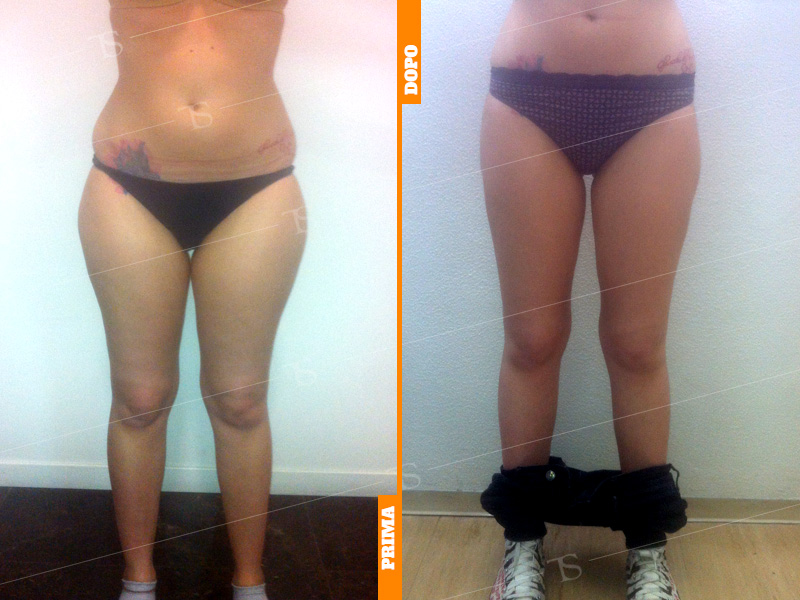
How to get beautiful legs? And how can legs be attractive? There is not just one answer. The Lower extremities are subject to aesthetic defects, often related to somatic conformation. A lean woman at waist may have large calves or swollen ankles, or disproportionate thighs and large knees. On the contrary you may see severely overweight people with relatively slender and tapered legs or,again, a very muscular build with slender legs. The hereditary factor therefore has a decisive role in the appearance of the legs even though it can obviously depend on each lifestyle factor like regular sports activity, proper nutrition and other remedies like compressive stockings to reduce water retention. To reduce unwanted fatty pads and deposits, liposuction is the cosmetic surgical procedure that restores a slender, toned and harmonious appearance. A correct balance of proportions between trunk and lower extremities gives back a nice and slender appearance. The legs, especially for women, are an important factor in self aesthetic evaluation whilst the body is a tool of relations between people. Improving our appearance it’s a matter of gratifying self esteem in front of a mirror so to live in a more open minded way.
History of Liposuction
This technique was invented in Paris at Saint-Louis Hospital by Drs. Fournier and Yves Gerard Illouz in 1982, who were the first to use instruments derived from gynecology to remove excess fat.
The original method removed fat deposits by suctioning them out with multiple back-and-forth passes of the cannulas, leaving multiple tunnels in the adipose tissue. In the years that followed, the procedure was performed as if it were a relatively simple operation, which led to complications—some of them serious—that gave it a bad reputation. With new techniques for reducing bleeding and for anesthesia, complications have been drastically reduced. In recent years, additional less-invasive techniques have been refined—such as micro-liposuction, vibro-assisted liposuction, laser lipolysis, and Vaser liposuction or Lipo Saver—to achieve even more spectacular results.
Identifying and Correcting Thigh Imperfections
As mentioned, imperfections in the legs can affect various areas of the lower limbs:
- coulotte de cheval: the French term for very wide trochanters and outer thighs. This area is corrected through liposuction and redefining the transition point between the buttocks and thighs to elongate the “line” of the leg in terms of height.
- lower back: this area can be improved by narrowing the waistline while simultaneously enhancing the contour of the buttocks
- hips: closely connected to the lower back region, this area is treated in conjunction with liposuction and abdominoplasty or as part of the reduction of “love handles”
- inner thighs: a delicate area because discomfort is often related to skin chafing during the summer. Superficial liposuction is recommended to allow for better skin elasticity. However, preoperative skin elasticity must be carefully assessed to prevent sagging and avoid the need for a thigh lift at a later date.
Localization and Correction of Leg Imperfections
- Inner knees: a key area for defining the legs with grace and sensuality when wearing a skirt.This area connects to the part above the knee, which is contoured, and the area of the inner shin below the patella.
- Anterior region of the patella: In some women, small accumulations form as a result of chronic lymphatic stasis, measuring 2–3 centimeters in diameter, right around the patella. In this case, liposuction must also break up the fat superficially and allow for proper retraction, a process that will take several months.
- Inner and outer ankles: These two areas are essential for elongating the legs, as this is where the silhouette’s slenderness begins. Defining the ankle requires cannulas with a diameter of 1–2 mm and meticulous attention to detail to ensure even and uniform results, as the skin in this area is less elastic than elsewhere.
Underdeveloped calves: The most common issues in the calf area include a lack of muscle tone, the presence of cellulite, asymmetry, and “slender calves” that are too thin—often resulting from polio or atrophy caused by foot malformations (clubfoot). Correction is achieved by harvesting adipose tissue through small cannulas, manually aspirating it from other areas of the body, and re-injecting it into the area to be corrected (lipofilling). Alternatively, volume can be increased with hyaluronic acid (Hyacorp, Naturalize, or Concilium) if the patient is too thin.
Specialist Consultation for Leg Liposuction
To assess the cosmetic issue and determine the best approach to address it, the patient will first undergo a thorough specialist consultation with Dr. Tommaso Savoia. During the consultation, the patient will discuss the issues and expectations regarding the procedure, clarify any doubts, and review the results of previous surgeries by comparing photographs of cases similar to their own. The patient will be presented with all possible surgical options, and the surgical technique best suited to resolving their specific problem will be described. The surgeon’s recommendation will be discussed with the patient: specifically, the doctor will mark on the patient’s body the area of skin and/or fat to be removed and indicate where the scar will be visible.
Localized Fat Deposits on the Legs and Lipedema
Distinguishing correctly between localized fat deposits and lipedema allows us to identify the appropriate therapeutic approach. Localized fat deposits are a common, painless accumulation of fat, whereas lipedema is a chronic condition of the subcutaneous tissue. The distinction between a physiological and a pathological condition is based on three criteria: symmetry and body proportions, tenderness on palpation, and response to diet.
Localized Fat Deposits
Nature: This is an accumulation of physiological and healthy adipose tissue, linked to genetics, lifestyle, or general weight fluctuations.
Sensitivity: It does not cause spontaneous pain, hypersensitivity, or pain upon pressure or palpation.
Distribution: Often asymmetrical or limited to specific “pads” (e.g., culotte de cheval or the inner knee).
Response to Weight Loss: It responds proportionally to a healthy lifestyle, a low-calorie diet, and physical activity.
Bruising: No particular predisposition to ecchymosis or capillary fragility. [1, 2, 3, 4, 5]Preparation for Surgery
At the end of the consultation, after outlining all the steps and information related to the procedure, the doctor orders the necessary clinical tests to gather essential data regarding the patient’s health status. If the test results are normal, the patient may undergo the procedure. The specialist will also be informed by the patient of any allergies to antibiotics and whether or not to discontinue any medications or drug therapies the patient is currently taking.
Surgical Corrections
Leg Liposuction via Microliposculpture
This procedure is performed under assisted local, spinal, or general anesthesia and involves an initial phase of tumescent infiltration with a saline solution containing a local anesthetic and a vasoconstrictor, as described by Klein, to reduce blood flow. The leg liposuction procedure then begins with the aspiration of fat deposits using blunt-tipped cannulas with perforated tips. The quality of the procedure lies in the uniformity of the aspiration process, performed in progressive layers from deep to superficial. The skin is then released using a “duckbill” cannula to allow for its even redistribution over a new surface. We must not forget that in liposuction, the fat that remains is always more important than the fat that is aspirated! Depending on the skin type and the amount of volume aspirated, the postoperative recovery may be faster or slower.
Liposculpture or Leg Liposuction Combined with Buttock Lipofilling
In this case, this means that fat is not only removed but, through a washing and filtration process, reused and injected into areas that benefit most from increased volume. Specifically, these are areas where cellulite has caused buttock retraction; the buttocks, which are lifted through fat grafting as in the technique known as BBL; or the calves, when they are augmented to rebalance slender legs or enhance the silhouette following ankle reduction.
Thigh Lift and Leg Liposuction
A thigh lift is recommended to remove sagging skin from the upper inner thighs following weight loss or after extensive liposuction, where the skin has failed to retract adequately. In the combined inner thigh lipolift technique, the procedure involves lightening the skin flap by removing fat through superficial liposuction, followed by the removal of excess skin to restore adequate tension to the remaining skin. The scars remain on the inner side of the groin area, extending in a straight line down to the gluteal crease. They will be more or less noticeable depending on the patient’s skin characteristics and the skin’s ability to regenerate.They will still be hidden by regular underwear. However, this is a delicate procedure due to the challenges of the healing process in an area prone to heavy sweating and skin maceration. Furthermore, the scar—which is positioned to be hidden between the mons pubis and the groin—often tends to slip downward due to the pulling force of daily movement. Therefore, this is a surgical indication that must be selected with extreme care.
HD Liposuction with the Vaser Lipo, PAL MicroAire, and Argon Plasma Trio
New ultrasonic liposuction methods (Vaser or Saver), combined with Power-Assisted Lipo (PAL-vibroliposculpture), first emulsify the fat using ultrasound to minimize trauma and then use PAL to aspirate the fat in a smooth, even manner, minimizing the risk of surface irregularities. Finally, Argon Plasma or Renuvion J-Plasma pulses correct sagging skin by stimulating and tightening it (within reasonable limits). All three of these phases combine to achieve what is known as HD Lipo for a perfect silhouette!
Postoperative Liposuction Care
At the end of the leg liposuction and buttock lipofilling procedure, while still in the operating room, a compression garment—such as overalls or therapeutic compression stockings—is applied from the feet up to just below the breasts. After a night of bed rest, the patient will be able to move about freely, experiencing some diffuse pain but without any limitations on movement
Swelling due to fluid retention and bruising may occur. The sutures will be removed between the seventh and fifteenth day after surgery. It is recommended to begin lymphatic drainage massages using vigorous techniques that drain the limb approximately 10 days after surgery, twice a week for about 2 months. The goal is to expel fluids and accelerate the tissue re-contouring process. Physical activity is compatible with the postoperative recovery only about one month after surgery. The initial results will be noticeable after one month as the bruising subsides, while the final results will be evident after 12 months once the swelling caused by water and serum has resolved.
Postoperative Care for Thigh Lift
In the case of a thigh lift, however, for the first 48 hours following the procedure, complete bed rest is required (a 1- or 2-night hospital stay) with drainage tubes in place. After the first dressing change and the removal of any catheter, the patient may get out of bed and be discharged. It is advisable to rest for 10–15 days after the operation to avoid undue strain on the recent surgical wounds as they heal. Subsequently, daily dressings with local chlorhexidine-based antiseptics and showers should be performed, and healing will take approximately 20–25 days.
Costs of Leg Liposuction and Liposculpture
The price of leg liposuction starts at 2,500 and varies depending on the number of areas on the lower limbs involved, whether the procedure uses Vaser ultrasound and Argo plasma technology, and whether it is performed on an outpatient basis or under general anesthesia with hospitalization.
Clinic costs can account for up to 40% of the total cost of the procedure, but, where necessary, safety is non-negotiable.
USEFUL INFORMATION
Lasting
Complexity
Anesthesia
dressings
healing time
Befor and After